When diagnosed with spondylolisthesis, many people feel a sense of fear.
One of my vertebrae had slipped. This sounded very serious, making me afraid to move around. The doctor suggested conservative treatment first, so I obediently rested, did rehabilitation, took medication, and avoided lifting heavy objects. The pain gradually stabilized, and life seemed to be able to go on.
But then, you find yourself in a very difficult situation.
On one hand, you know that prolonged inactivity is detrimental; your muscles will weaken, and your body will become increasingly stiff. On the other hand, you're also afraid that if you move incorrectly, will that section slip even more? Will the pain return?
Wanting to move, yet afraid to move. This is probably the common feeling of everyone with spondylolisthesis.
First, understand that the core issue with slippage is "instability".
To understand how it can move, you first need to understand what slippage actually is.
Spondylolisthesis, also known as vertebral slippage, occurs when a segment of the spine slides forward relative to the segment below it. It most commonly occurs in the lower lumbar spine, which is the area that bears the most weight.
The real problem isn't as simple as "that bone has slipped out," but rather that segment has become "unstable." It moves more and is more prone to swaying than a normal spine. When this unstable segment bears improper force during movement, the surrounding muscles have to desperately compensate to stabilize it, which over time leads to fatigue, tightness, spasms, and then pain.
Once you understand this, the answer becomes clear.
What the slipped segment truly needs is neither complete immobility to protect it, nor frantic exercise to fight it. What it needs is stability—gentle yet reliable support for that unstable segment.
Some actions do require caution.
Before talking about what you can do, be honest about what you are not suitable to do, because this is especially important for slippery people.
Generally speaking, to avoid spondylolisthesis, one should avoid actions that cause excessive backward extension of the lumbar spine or excessive compression and shear force on the spine.
Excessive lumbar lordosis (that is, arching the waist forward and bending the lower back significantly) may push the already slipping segment even further forward. Traditional sit-ups, heavy squats and deadlifts, and high-impact running and jumping can put significant stress or shear force on an unstable spine and are generally not recommended.
This is why people with spondylolisthesis should never try to practice on their own by watching online videos. What you need is someone to understand your condition and guide you to avoid these risks.
So what exactly can it do? The answer is "deep stabilization".
The good news is that research shows that more than 70% of patients with low-grade spondylolisthesis can experience significant improvement in their symptoms through conservative exercise therapy and activity adjustment, so many people do not need to go for injections or surgery.
The key is to choose the right sport.
The most helpful approach to spondylolisthesis is deep core stabilization training. Activating the deep, spine-close stabilizing muscle groups, such as the transverse abdominis and multifidus, allows them to relearn how to support the unstable segment. This deep support isn't achieved through forceful tension, but through a continuous, automatic, and effortless stabilization.
There's also pelvic control. Learn to keep the pelvis in a neutral, safe position, preventing the lumbar spine from falling into that dangerous excessive backward tilt. And strengthen the area around the hip joint, allowing the hips to share the load with the lumbar spine.
These are precisely the core elements of Chanrou.
Why is Chanrou particularly suitable for people with spondylolisthesis?
It trains deep dynamic stability.
Chanrou's understanding of the core is never about "tightening your abdominal muscles." It trains the automatic coordination of the deep core system, activating the deep muscle groups close to the spine through breathing.
This is exactly what a slipped vertebra needs most. That unstable segment doesn't need stiffness created by superficial muscles, but rather continuous and gentle support from the deeper systems. This support accompanies you in every daily movement—walking, bending over, lifting things—protecting that segment.
Narrowing the pelvis provides a stable base for the spine.
Chanrou has a core technology called pelvic narrowing. It activates a stabilizing force from deep within the pelvis, giving the spine a reliable base.
For people with slippage, this stable base is crucial. It helps keep the pelvis in a safe position, prevents the lumbar spine from falling into that dangerous excessive backward tilt, and provides gentle, upward support to that unstable segment.
It can avoid danger and adapt to individual needs.
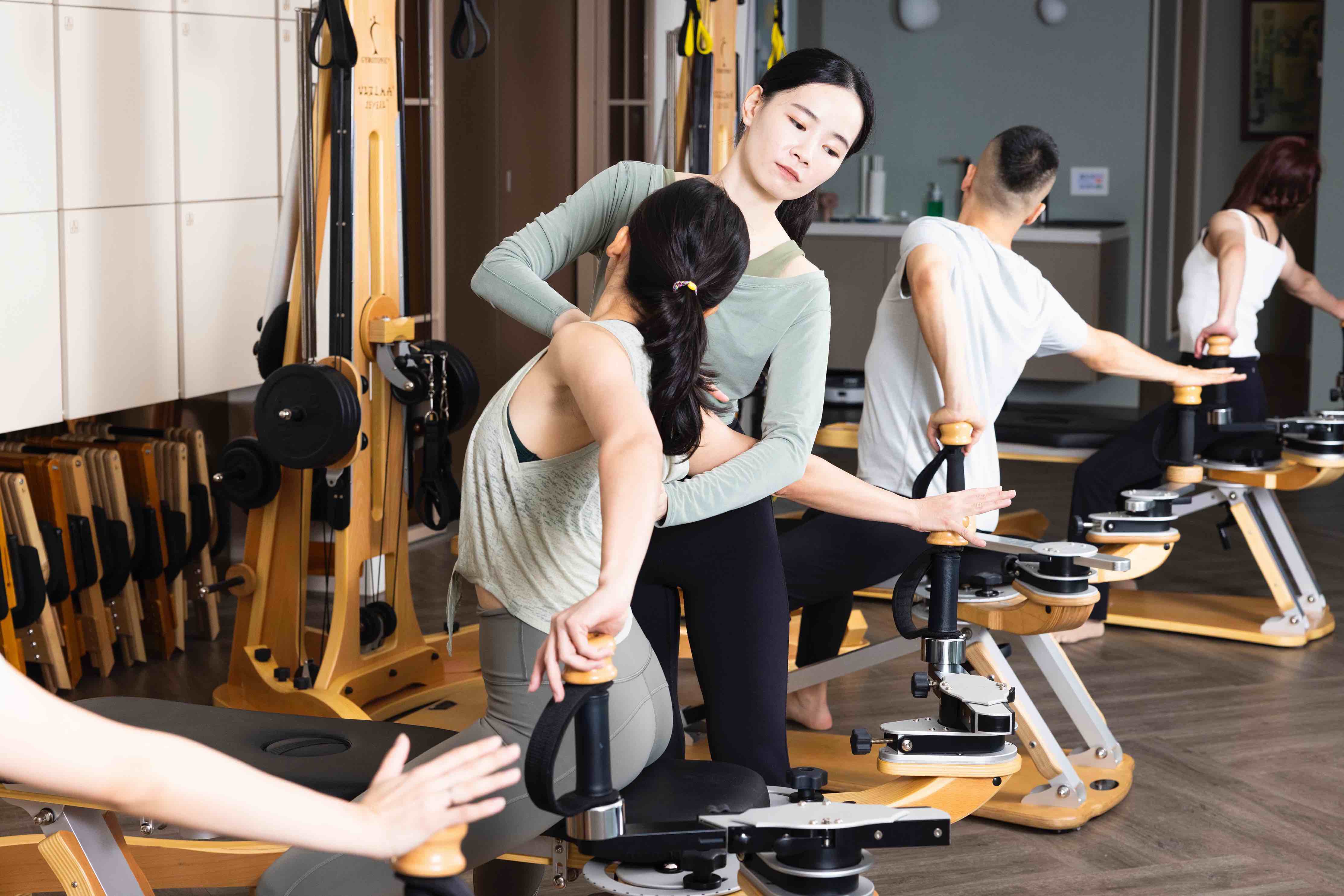
Chanrou is highly personalized. A teacher who understands spondylolisthesis will know which movements to avoid and will help you adjust each movement so that you can move within a safe range.
This kind of personalized adjustment is exactly what people with spondylolisthesis need. You don't need to be in a large classroom, following others and doing movements that could be dangerous for you. What you need is someone specifically watching over you and taking responsibility for your spine.
It is gentle and does not cause shock.
The movements are gentle, fluid, and controlled, without leaps, high impacts, or violent actions. For someone with a slipped vertebra who fears that "making a mistake will worsen the condition," this gentleness itself is a source of reassurance.
From "not daring to move" to "moving smartly"
For people with spondylolisthesis, the biggest hurdle to overcome is the psychological one.
The fear of "would moving make things worse?" leads many people to choose complete immobility. However, complete immobility weakens the muscles supporting the spine, leaving that segment increasingly unprotected, which is actually more detrimental in the long run.
The real answer isn't stillness, but intelligent movement. Avoid dangerous movements, do the right training that builds stability, and let your body develop enough strength to protect that unstable segment.
When your deep core truly begins to function, when your pelvis learns to maintain a safe position, and when the muscles supporting your spine become reliable again, you'll find that the spine that has always caused you anxiety begins to become more stable. You no longer need to carefully "protect" it, because your body is now capable of supporting it properly.
Several important reminders
A medical evaluation is essential. Spondylolisthesis comes in different degrees and types, and some cases require special attention or even medical intervention. Before starting any exercise, please have your doctor or physical therapist evaluate you to determine if you are a suitable candidate and what movements should be avoided.
It is crucial to find a qualified instructor who understands spondylolisthesis. This is especially important for people with spondylolisthesis. Your instructor should understand your situation, know which movements to avoid, and be able to tailor a safe training program to your individual needs. Do not practice by watching videos on your own, and do not practice in an environment where no one understands your condition.
Stop immediately if any movement causes pain. Pain is a warning sign from your body. Safe exercise should not cause pain. If an activity hurts you, stop and tell your instructor and medical team.
If your spondylolisthesis has stabilized and you're wondering, "Can I still exercise?"
The answer is yes, as long as you use the right method.
It's not about remaining still and fearing it, but about using smart, gentle, and stable training to help your body rebuild the strength to protect itself.
With professional assessment and guidance from qualified teachers, your spine can regain stability, and your life can get moving again.