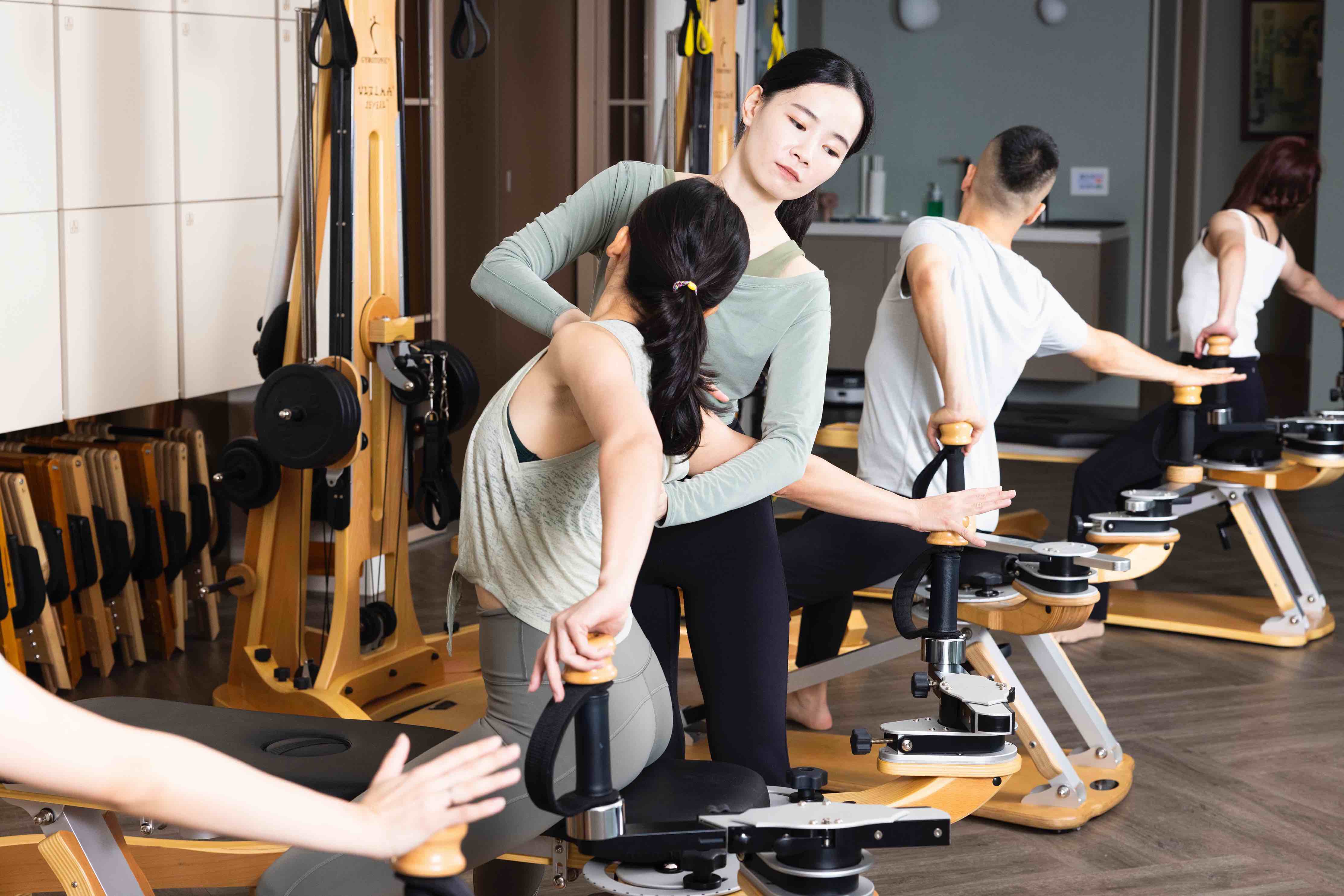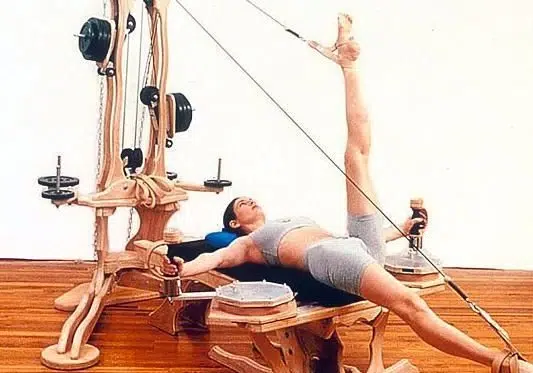
Almost everyone has heard of the term "core training".
But what is the real core? Is your core active right now? Do sit-ups and crunches really make your spine more stable?
The answers provided by the Chanrou system to these questions are completely different from what most people expect.
Your body is not flat.
Chanrou offers a fundamental redefinition of core training:
"We need to rethink the body. It's not a flat body with only a front and back, capable only of linear movements (up and down, opening and closing), but a three-dimensional body—a body that operates organically from within and flows from within."
The core is not one or a few muscles, but the body's overall coordination in three-dimensional space.
What is dynamic trunk stability?
Dynamic Trunk Stabilization (DTS) refers to the ability of the trunk and limbs to move in a balanced and coordinated manner across all planes of motion. The most important function of the trunk is to provide this dynamic stability—which is crucial for injury prevention, rehabilitation, and all stages of physical training.
Stability requires all three systems to work simultaneously.
Modern anatomy and Panjabi's model of spinal stability indicate that a healthy body relies on the coordinated operation of three interdependent systems:
Bones and ligaments (passive system) – Bones provide support, ligaments connect the bones. Muscles and fascia (active system) – Muscles connect to and drive the skeletal framework. Nervous system (control system) – Nervous system coordinates muscles through the central and peripheral nervous systems.
Traditionally, we've focused solely on skeletal and ligament issues, addressing back pain by strengthening abdominal or back extensor muscles. However, true spinal stability requires the coordinated functioning of all three systems—the absence of any one renders stability incomplete.
Chanrou was designed this way from the very beginning.
Tenseggrity: the structural wisdom of the body
When the three systems work in harmony, the body will exhibit a state of "Tensegrity"—a structural principle that combines "Tension" and "Integrity".
The body contains approximately 70 trillion cells, which are wrapped and maintained in the correct position by a fascial network resembling a 3D spider web. In this model, the skeleton acts as a sturdy pillar, while the myofascial system is like a continuously inwardly stretched elastic network, providing the human body with a perfect balance between stability and movement.
As Juliu said, "Imagine your torso as a spider web attached to a chain. There are little bells on the web. Through your practice, you will make them all ring."
Chanrou's training is precisely about rebuilding and maintaining this whole-body tension integration system.
Local muscle groups vs. overall muscle groups: Which do you really need?
Local muscles, located deeper and closer to the joints, are responsible for the subtle stability of the joints and proprioception—the pelvic floor muscles, transverse abdominis, and multifidus are examples of this type of muscle group.
Global muscles, located more superficially, are responsible for larger movements and the transfer of external loads—rectus abdominis, latissimus dorsi, and erector spinae.
Many people's "core training" focuses almost entirely on the overall muscle groups—sit-ups, crunches, planks. These exercises strengthen the surface muscles but don't truly activate the deeper, localized muscle groups. As a result, the spine may appear to be supported, but in real dynamic situations—sudden turns, missteps, lifting heavy objects—the deeper support system remains silent.
Chanrou's training logic starts from the deepest level.
Breathing is the key to activating the core.
This is Chanrou's most unique and important core training principle: the deep core does not contract through willpower, but is activated by breathing.
Juliu said, "Breathing creates movement, and movement creates breathing. Pairing the two together doubles the effect."
Chanrou's "Exhale to Squeeze Breath" is the most precise tool for activating the deep core. Deep exhalation causes the ribs to contract inward, the sternum to soften, the transverse abdominis muscles to be naturally activated, and the pelvic floor muscles to work in sync—the entire deep support system is awakened in one breath.
This isn't about "thinking about exerting force," but rather about using the natural mechanisms of breathing to allow the deep core systems to automatically engage during movement. Research has also confirmed that the activation of the deep core does not respond to cognitive control—the more you "think about contracting your abs," the more likely you are to activate the superficial muscle groups, which in turn interferes with the automatic coordination of the deep core systems.
Pelvic floor muscles: the neglected core foundation
When people talk about core strength, they think of the abdomen. But the pelvic floor muscles are the foundation of the entire deep support system.
Activating the pelvic floor muscles requires the pelvis to be in a neutral position—neither excessively forward nor excessively backward. First, let your body feel the pelvic position of "looking forward with your ischial tuberosities." In this neutral position, the slight activation of the pelvic floor muscles will naturally lead to the deep contraction of the transverse abdominis muscles—that feeling is more subtle, deeper, and more real than any superficial exertion.
Creating stability through contrast
The most unique principle in Chanrou's core stability concept is: "Stabilization through Contrast".
Juliu says, "The practice of Chanrou achieves stability through contrast. At the starting point of two opposing forces, there is strength and stability, and the center of gravity there reflects centripetal and centrifugal, or explosive and cohesive activities."
This isn't about being "supported" by a single part of the body, but rather by the opposing tension of the entire body—the head extends upwards, the tailbone roots downwards, both ends point outwards simultaneously, and the center naturally stabilizes. It's like a fishing rod with a line: when the line provides opposing tension along its length, the weight the fishing rod can withstand increases significantly. The relationship between the spine and trunk muscles is exactly the same.
Five motion families establish dynamic stability from different perspectives.
Each movement family of Chanrou trains different aspects of dynamic stability:
The Arch & Curl family awakens spinal waves, stimulates internal organs and meridians, and opens up the flow of energy throughout the body. The Hamstring family strengthens the lower limb support system, establishing a stable foundation for the pelvis and legs. The Upper Body family sculpts upper limb strength, connecting the shoulder girdle and core. The Abdominal family strengthens the abdomen while maintaining flexibility, allowing the core to become the bridge connecting the upper and lower body. The Upper Body Opening family integrates all systems, allowing the whole person to return to a dignified, vibrant, and stable state.
These families train from different angles to achieve stability in the torso in a dynamic way—not through isolated reinforcement, but through holistic integration.
Every class is a new experience.
Juliu said, "Every practice session must be a new experience. Practice is not a routine."
True stability isn't a fixed pattern trained to work, but rather the nervous system's ability to continuously learn, adapt, and update. With each lesson, your body becomes a little more aware of itself. With each breath, the activation of the deep support system becomes a little more natural. With each spiral, the feeling of integrated tension throughout the body becomes a little more real.
This is dynamic trunk stability—not a goal you reach and then stop, but a state you get closer to with each practice session.