There are always a few days like that every month.
My emotions become volatile; I feel like crying or getting angry over the smallest things. My body starts to swell, my chest hurts, and my stomach feels heavy. I have headaches, backaches, and fatigue; I don't want to do anything.
This is premenstrual syndrome (PMS). According to research, about 80% of women of reproductive age worldwide experience premenstrual stress, characterized by physiological, psychological, and behavioral changes.
Most people treat it as "something you have to endure every month." But in fact, a growing body of research shows that exercise—especially mind-body exercises like Chanrou—can genuinely alleviate these symptoms.
First, let's understand: what exactly is premenstrual syndrome?
Its exact cause is not yet fully understood in medicine. However, research points to several key physiological mechanisms.
Hormonal fluctuations. During the luteal phase of the menstrual cycle, an imbalance in the ratio of estrogen to progesterone—with relatively high estrogen levels and insufficient progesterone to balance it—is considered a significant source of symptoms.
Changes in neurotransmitters. Fluctuations in ovarian steroids interact with central neurotransmitters, particularly serotonin, GABA, and endorphins. Studies have found that during the luteal phase, women with premenstrual syndrome have more abnormal serotonin levels than asymptomatic women. Serotonin is a key substance responsible for regulating mood, sleep, and many physiological functions.
A decrease in endorphins. During the late luteal phase, due to changes in sex hormones, the concentration of endorphins decreases. This decrease in endorphins is directly related to many mood symptoms.
Water retention. Hormonal changes cause the body to retain water, which is the source of premenstrual bloating, weight gain, and breast tenderness.
Understanding these mechanisms is important because it shows us that exercise helps with PMS not through some mystical process, but by directly acting on these physiological mechanisms.
Why can exercise relieve premenstrual syndrome?
This matter is supported by substantial research. In fact, the status of sports is higher than many people imagine.
Both the UK's National Institute for Health and Care Excellence (NICE) and the Royal College of Obstetricians and Gynaecologists (RCOG) recommend exercise as a first-line treatment for premenstrual syndrome, alongside medications such as selective serotonin reuptake inhibitors and combined oral contraceptives.
The mechanism by which exercise relieves premenstrual syndrome corresponds to each of the physiological problems mentioned above:
Boosting endorphins. Because endorphin levels decrease during the late luteal phase, aerobic exercise can increase endorphin levels, improve pain tolerance, and thus alleviate physical symptoms. This directly replenishes the endorphins lost during the premenstrual period.
Balance hormones. Physical activity can increase endorphin levels in the brain, helping to balance the secretion of progesterone and estrogen, and stimulating the synthesis of the body's natural anti-inflammatory substances.
It improves water retention. The muscle contractions caused by exercise help release retained water that causes swelling and soreness, thereby promoting circulation and helping the body better absorb excess fluid.
Relieves pain. The repeated muscle contractions during exercise can prevent the accumulation of prostaglandins and other substances in the pelvic cavity, thus reducing back pain and abdominal discomfort.
In other words, exercise is not just about "distracting you and making you feel better"; it actually intervenes in the physiological mechanisms of PMS at multiple levels, including hormones, neurotransmitters, circulation, and pain.
Chanrou, how do you address each level of premenstrual syndrome?
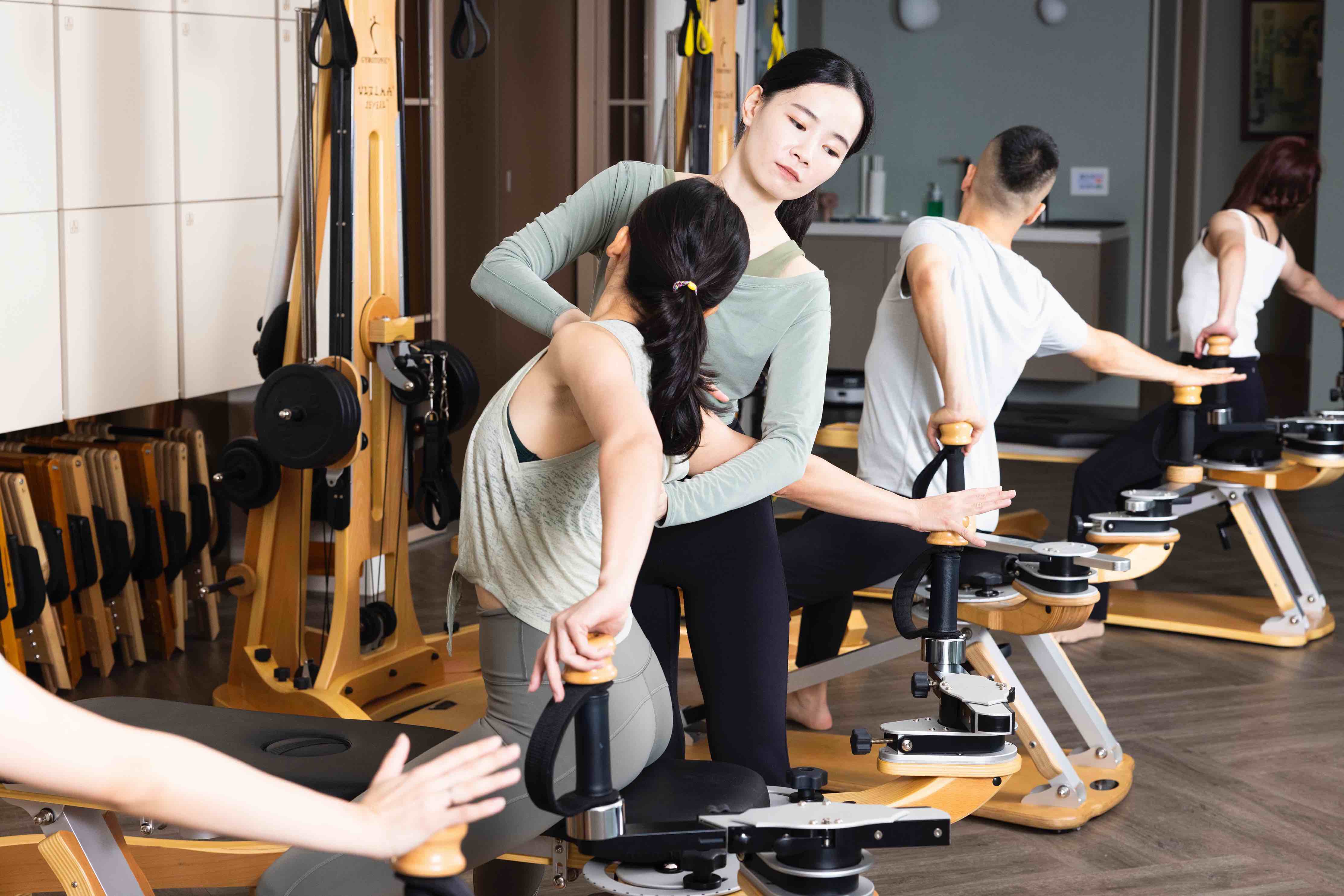
As a set of mind-body exercises, GYROTONIC® and GYROKINESIS® have several core characteristics that perfectly correspond to every intervention needed for premenstrual syndrome.
1. Activate the sacral energy bridge: relieve lower abdominal bloating and back pain.
Many women experience lower abdominal bloating and soreness that extends to the lower back due to pelvic congestion before their period.
When the blood vessels around the uterus and pelvic cavity become congested, the surrounding deep muscle groups (such as the iliopsoas and gluteal muscles) tend to unconsciously contract, compressing the surrounding nerves and joints.
The graceful Arch and Curl (forward and backward bends of the spine) and Hamstring (back leg series) emphasize narrowing the pelvis and bidirectional extension. Through three-dimensional undulation and wave-like movements, it establishes a smooth energy bridge between the sacrum and the cranium, actively stimulating and mobilizing the pelvic cavity and iliosacral joint.
This is like giving the uterus and abdominal organs a gentle, dynamic massage, which can effectively promote blood circulation in the pelvic cavity and "squeeze out" accumulated bloating and pressure. This also echoes the mechanism mentioned in the study—repeated muscle contractions can prevent substances such as prostaglandins from accumulating in the pelvic cavity and help release stagnant water and promote circulation.
II. Rhythmic breathing harmonizes the autonomic nervous system: soothes anxiety and emotional irritability.
The dramatic fluctuations in hormones before menstruation often leave the brain's nervous system in a state of overactivity, irritability, or depression. This is why sometimes we know we're fine, but we still can't control our emotions.
The spinal nerves are intricately connected to our internal organs and autonomic nervous system. When the nervous system is overloaded, the body becomes stiff.
The gentle movements are not merely physical actions, but a symphony of nerves and breath. Whether on equipment or a mat, every movement is synchronized with specific rhythmic breathing. This active and regular breathing deeply activates the parasympathetic nervous system, providing "ventilation" for an overactive brain.
This corresponds to the mechanism discovered in the research—the key to how mind-body exercises improve premenstrual mood symptoms lies in slow diaphragmatic breathing and the resulting enhanced alpha wave activity. This enhanced alpha wave brain activity is associated with relaxation, mood stabilization, and increased serotonin release. As the nervous system switches from "fight or flight" mode to repair mode, the anxiety and restlessness characteristic of premenstrual syndrome naturally subside gradually through fluid movements.
3. Activating the solar plexus: Improves edema and indigestion
Many women experience severe constipation, bloating, or general edema and lethargy before their period. In Chanrou's philosophy, this represents blockages in the body's meridians and energy channels.
The numerous spiral and circular movements in Chanrou's movements gently stimulate the solar plexus located in the upper abdomen, igniting the body's digestive fire and promoting the metabolic and excretory functions of internal organs such as the kidneys, intestines, and liver.
In sync with the rhythm of the movements, fluid pressure is generated within the body, similar to "exercising in water." This provides gentle cardiovascular aerobic stimulation, accelerates lymphatic and blood oxygenation throughout the body, and expels excess water and stagnant gas through the pores, leaving the sluggish body refreshed.
Its gentleness is what makes it particularly kind to the premonitory period.
This is a very important advantage of Chanrou for treating premenstrual syndrome.
Before and during menstruation, many women don't want to do high-intensity exercise, nor are they suitable for it—their bodies are already very tired and uncomfortable, so forcing themselves to run or do weight training is just a burden.
Chanrou's gentle, fluid, and adjustable qualities make it a particularly suitable choice for these days. You don't need to fight your body; you can go with your body's current state and gently get the circulation moving, calm your nervous system, and slowly release the accumulated tension and discomfort.
A more fundamental value: reconnecting with the body
Beyond these physiological mechanisms, Chanrou has a deeper significance for premenstrual syndrome.
A large part of the premenstrual distress comes from a feeling of "not being able to control your body"—emotions suddenly come, your body suddenly swells, fatigue suddenly overwhelms you, and you can only passively endure it.
Chanrou's cultivation of body awareness changed this relationship. When you are more aware of your body—feeling where the tension is, where circulation is stagnant, whether your breath can reach your abdomen—you transform from a passive recipient into someone who can respond to your body.
You begin to understand what kind of movements your body needs, what kind of breathing it needs, and what kind of care it needs during those days.