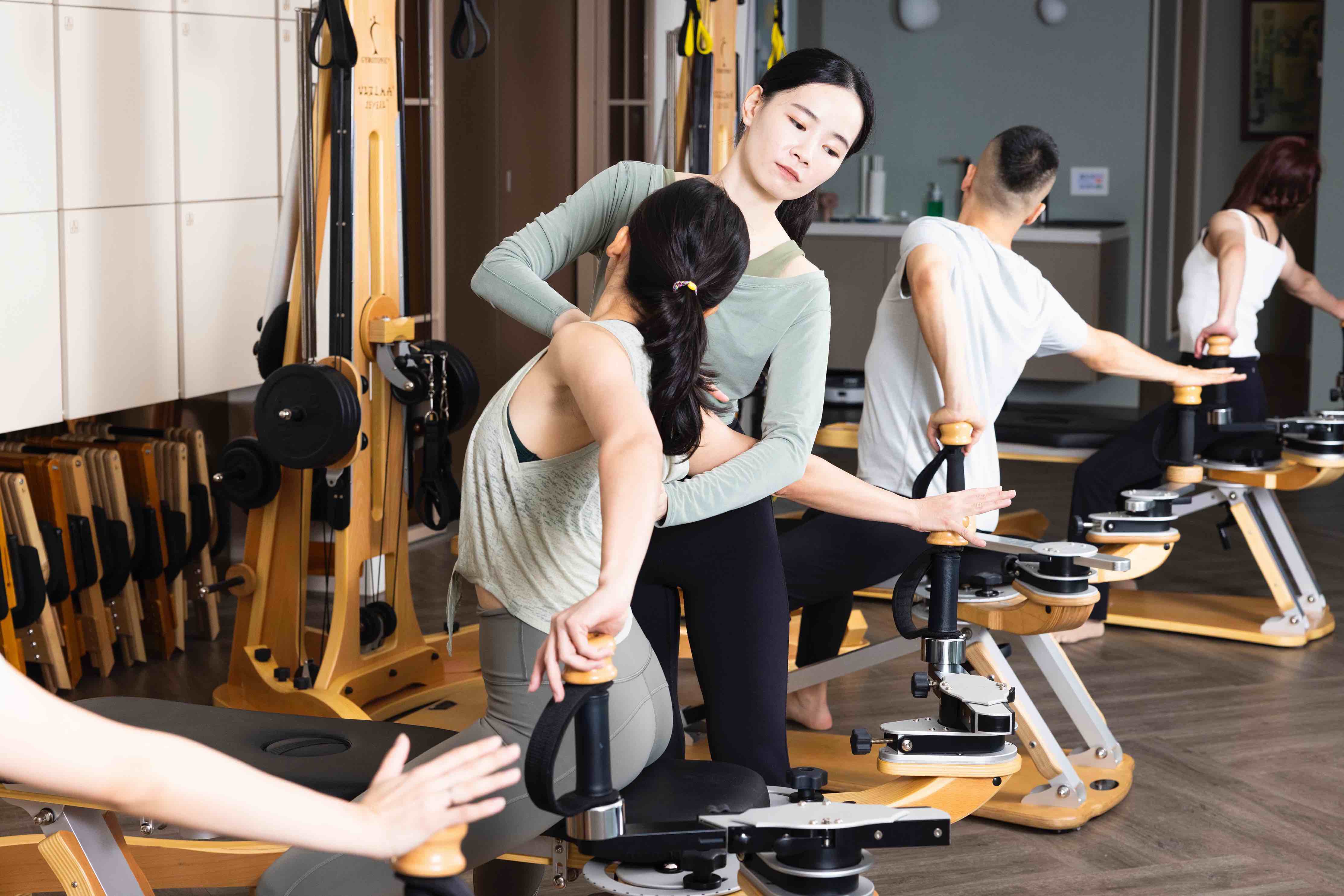
Many people's understanding of stretching is as follows:
It needs to hurt a little for it to be effective. If you don't feel anything, it means you haven't pooped.
This misconception is one of the root causes of numerous sports injuries.
The myth of "No Pain, No Gain"
In traditional sports culture, pain is seen as proof of progress. Stretching to the point of tightness and stretching to the point of discomfort is considered a valid approach—this logic sounds reasonable, but from the perspective of neuroscience and fascia research, it is almost entirely wrong.
When stretching causes pain, the nervous system immediately activates a protective response—muscle reflex contraction—to prevent tissue tearing. This response is called the "stretch reflex." In other words, when you force your body into a painful stretch, the muscles are actually contracting in resistance, not relaxing and extending. The harder you pull, the more the muscles contract—a vicious cycle that completely negates the benefits of stretching.
The longer-term problem is that repeatedly stretching within the painful area can cause micro-tears in the fascia, which accumulate into chronic inflammation and eventually lead to more adhesions and tightness—the exact opposite of what you want.
GYROTONIC® and GYROKINESIS®'s core philosophy: Moving on the edge of comfort
GYROTONIC® and GYROKINESIS®'s philosophy of extension is based on a fundamentally different premise:
The body can only truly relax and extend when it feels safe.
This isn't about being conservative, it's about efficiency. When the nervous system feels safe, the stretch reflex isn't triggered, allowing muscles and fascia to truly stretch; when the nervous system is on alert, any external force will only tighten the tissues.
The gentle, flowing rhythm and wave-like undulation constantly soothe the nervous system. We don't hold our breath or stay still for long periods; instead, we find boundaries in the movement, allowing the brain to feel that "this action is safe." When the nervous system relaxes, the brain naturally releases permissions, allowing the muscles to achieve deeper extensions without pain.
GYROTONIC® and GYROKINESIS®'s movement design always moves on the "edge of comfort"—there is sensation, but not pain. This edge is the range that the nervous system is willing to open up, and it is also where true stretching and extension can occur.
Why do the stretching methods of GYROTONIC® and GYROKINESIS® differ?
Dynamic replaces static
Static stretching (holding a position still) has very limited effects on fascia. Fascia is a dynamic, fluid system that requires dynamic compression and release to truly change.
The graceful stretching of GYROTONIC® and GYROKINESIS® is always dynamic—the spine extends in waves, the arms open in spirals, and the joints find space in arcs. This dynamic approach allows the fascia to rehydrate through continuous flow, rather than being forcibly stretched by static forces.
Counter-stretching replaces unidirectional stretching
Traditional stretching is unidirectional—pulling the muscle in one direction. This method is prone to overstretching because there is no support from the opposite side to protect the tissue.
There's an ironclad rule in GYROTONIC® and GYROKINESIS®: without "narrowing," there is no "lengthening." When we extend our arms outward, the muscles in our back must simultaneously contract inward; as the spine surges upward, the pelvis must firmly root itself downward. This "opposition" acts like an invisible protective net for the body—when the muscles maintain tension during activity, it protects the joints like a spring, preventing instability caused by overstretching.
Intent to replace brute force
GYROTONIC® and GYROKINESIS®'s guidance is never about "pulling hard there," but rather "imagining extending there." The intention drives the movement, rather than forcing it with external force.
This difference is crucial. When you extend your intention, the brain sends an exploratory signal, and the nervous system remains open; when you force it, the brain sends a coercive signal, and the nervous system goes into a defensive posture. The former allows the body to open voluntarily, while the latter makes the body more constricted.
The aid of machinery: making gravity an ally
The equipment designed by GYROTONIC® and GYROKINESIS® allows trainees to move with some of their weight off—the joints don't need to bear full compression, and the body extends in a relatively light state. This makes it possible to safely explore ranges of motion that were previously inaccessible due to weight-bearing.
Overuse injuries: a more common crisis than muscle strains
A muscle strain is acute and easily detected. Overuse injuries are chronic and often accumulate over a long period before symptoms appear.
The cause of overuse injuries is usually not "training too much," but rather "training with the same movement pattern all the time." Repetitive, one-way movements subject specific tissues to the same stress repeatedly, eventually exceeding their repair capacity.
GYROTONIC® and GYROKINESIS®'s prevention of overuse injuries stems from several design principles:
Multi-planar movements. The graceful spiral and arc movements allow each exercise to act on the tissues from multiple directions, preventing stress from accumulating to an excessive degree in any one direction.
Quality of movement takes precedence over quantity. GYROTONIC® and GYROKINESIS®'s culture never emphasizes the number of repetitions or intensity, but rather the quality of movement. One well-executed movement is far more beneficial to the organization than ten hastily performed movements.
Narrowing activates deep support. Pelvic narrowing plays a crucial role in every movement sequence—it ensures that the deep stabilization system is activated before movement, preventing superficial muscles from overcompensating. This is the most fundamental protective mechanism against overuse injuries.
Distinguishing between feelings: What are good feelings, and what are danger signals?
One of the key skills in GYROTONIC® and GYROKINESIS® training is learning to distinguish bodily sensations.
Feelings worth exploring further: a sense of extension, a slight warmth, a feeling of "opening up," and a lightness after movement.
Signals that you need to stop: sharp stinging, a clenching sensation in the joints, persistent soreness or swelling after movement, any feeling that "something is wrong".
GYROTONIC® and GYROKINESIS®'s instructors continuously guide students to engage with these sensations in class—not by making decisions for them, but by helping them develop the ability to recognize their own bodily signals. This ability is the most important foundation for long-term injury-free practice.
Painless, but not without challenges
GYROTONIC® and GYROKINESIS®'s "painless stretching" philosophy is not about keeping you in your comfort zone forever.
It's saying that challenges and pain are different things. Gentle stretching is not about enduring pain, but about releasing through flow—finding softness in safety, avoiding strains and overuse, and allowing the body to truly maintain long-term health.
Real progress happens when the nervous system feels safe and tissues are explored in a supported state—not in coercion and pain.
When you learn to move on the edge of comfort, you'll find that edge gradually widens. It's not about pushing yourself through with willpower, but about your body truly opening up.